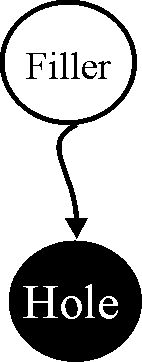
 We are born with a bio-illusion — a bio-hoodwink(1) — that goes like this: Through hunting, “I” gathers fillers to satiate (fill) the hole. Primal emotions of need (e.g., desire, wish) and fear (e.g., insecurity, anxiety) drive this illusion forward. This illusion originates in the survival instinct to find food to fill the empty belly. The illusionary aspect here is that the urge promises “I” will feel lasting contentment once “I” fill the hole. As chapter 46 notes, There is no disaster greater than not being content. Naturally, this promise is broken the moment the next need arises, which is often within moments.
Long-term Pleasure vs. Long-term Pain
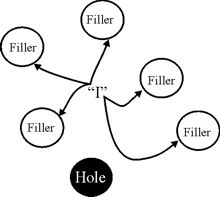 “I” jumps from one filler to the next, driven by the short-term need to fill the hole. The hole is the eternal nothing, as chapter 40 literally puts it, All under heaven is born in having, having is born in nothing… Nothing correlates to the void, eternity, death, silence, loss, etc. The filler is a transitory thing. It correlates to having something we feel will bring happiness… i.e., objects of our desires, dreams, hopes, etc. The fillers are illusory because the contentment they bring is particularly fleeting compared to their promise. (See Correlations, p.565.)
The quest to fill the hole is futile in the long-term. Accepting this paves the way to the alternative (2) suggested in chapter 16,
Certainly, this is easier said than done, yet unless said and re-said, accepted and re-accepted, the illusion will continue to dominate awareness.
Biology hoodwinks us and sends us off on one wild goose chase after another in search of short-term pleasure. As chapter 65 hints, Of old those who excelled in the pursuit of the way did not use it to enlighten the people but to hoodwink them. The most “of old” here is Nature. Nature’s role is to ensure that all living creatures seek what they need to survive. We start at ‘X’ and go around in circles feeling we are making progress, when in truth we are simply headed back toward where we began — as chapter 40 says, Turning back is how the way moves.
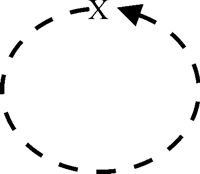 Nature hoodwinks living things into feeling that if they keep moving “forward” around this circle, they will succeed and find contentment. Ironically, true contentment only comes with death. Of course, Nature can’t allow living creatures to know this intuitively; otherwise, they wouldn’t take filling the holes seriously enough to survive! Only as we age, can this occasionally begin to ring true.
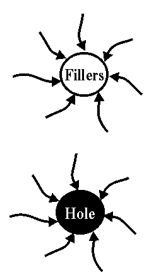 Civilization short-circuits the abundant balancing forces in nature, which throws nature’s bio-hoodwink process out of balance. Particularly problematic is our ability to increase the pleasurable aspects of life, and sidestep the unpleasant aspects. In addition, we easily lose ourselves in either a remembered past or an imagined future, instead of making the most of our moment as other Earth creatures do. This only adds to our long-term pain.
Fortunately, realizing nature’s hoodwinking ways can help us regain some balance. In other words, knowing the rules of life’s game helps us play it more effectively. Short-term pain; long-term pleasure succinctly expresses the approach often needed to regain balance. However, our biology innately drives us to the opposite — short-term pleasure; long-term pain. All we sense is the promise of the pleasure. The pain is a hidden and unintended consequence. Chapter 16 (above) outlines the short-term pain; long-term pleasure path. It doesn’t come naturally; we must prove through life experience that it leads us where we truly wish to be.
(1) I may have coined a new word here, at least as I use it.
(2) As always this is in the eye of the beholder, i.e., it is only true if you have found it so. The proof is in the pudding of your experience