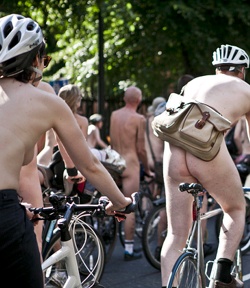
 Styles of thinking and clothing have a lot in common. We are born with mind simple and body naked. We soon dress our body in clothes and our mind in thoughts. Wishing to return to our original self physically, we can just go naked. Wishing to return to our original self mentally is another matter.
Chapter 49 hints, The sage has no mind of his own. He takes as his own the mind of the people. Chapter 16 sheds light on how this can happen:
The problem in returning to one’s roots lies in styles of thinking. I see two archetypical cognitive styles (A and B below) from which we pick, sometimes one, sometimes the other. Which is your normal preference?
(A) Discerning differences: This mode tends to support biases, which augments tribal connection, i.e., ‘us’ vs. ‘them’. This reinforces judgments and our sense of social fairness. This can leave one feeling either pleased by the justice or annoyed by the injustice, depending on circumstances. This style is more akin to classical physics.
(B) Discerning similarities: (1) This mode tends to neutralize biases, which augments chapter 49’s having no mind of your own. This can also neutralize judgments and our sense of social fairness. This can leave one feeling serene vis-à-vis the natural justice of the way, regardless of circumstances. This emptiness also heightens a soulful sense of solitude. As chapter 39 hints, Thus lords and princes refer to themselves as ‘solitary’, ‘desolate’, and ‘hapless’. This is taking the inferior as root, is it not? This style is more akin to quantum physics (entanglement).
Talk of shoring up or neutralizing one’s biases may be misleading. Perhaps knowledge is a better word here than biases. After all, at the deepest level knowledge and bias share common ground. Let me clarify the knowledge issue…
Not being omniscient, we can’t know anything absolutely. This means all knowledge is relative and ultimately rests on the shifting sands of what we assume we know. As chapter 21 notes, As a thing the way is shadowy, indistinct. We compensate for this dreadful murkiness with a passionate conviction in our beliefs. Thinking style (A) helps accomplish this by focusing much more on discerning differences than similarities.
Discernment of differences, differentiating ‘this’ from ‘that’, is the foundation upon which knowledge rests. Reducing the discernment of differences is one way to alleviate knowledge’s impact on perception. Thinking style (B) helps this by looking for as much similarity between apparent differences as possible. Then, when chapter 10 asks, “When your discernment penetrates the four quarters are you capable of not knowing anything?”, you can answer, “Yep! All I see is mysterious sameness” – #56.
It all comes down to a choice between relying on a point of view that magnifies differences, or one that shrinks differences. In casual matters, thinking style (A) works well. It is fun and parallels chapter 1’s Allow yourself to have desires to observe its manifestation. However, in serious matters, I prefer style (B) which fosters serenity (2). It parallels chapter 1’s, Rid yourself of desire in order to observe its secrets.
Note, I use the word choice lightly. Ultimately, emotion pushes us into the choice we make. Nonetheless, an awareness of each style can help one deal with the consequences of each. In the end, isn’t that what really matters. It is not that one succeeds. After all, in the end we all fail, i.e., we die. Chapter 33 hints at what matters,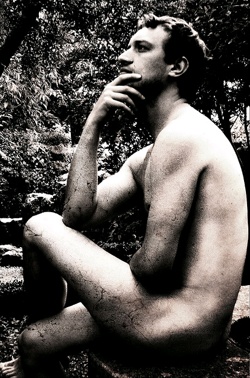
This is where styles (A) and (B) join forces, as both drive us to strive on in one way or another. Indeed, we can’t help but strive on diligently, naturally. We merely think we should strive harder! No wonder we have difficulty. Nonetheless, awareness of this self-inflicted difficulty helps greatly. As the end of chapter 71 says, The sage meets with no difficulty. It is because he is alive to it that he meets with no difficulty.
(1) Style B parallels the Correlations process. Using Correlations to ponder life requires discerning similarities to the point of no return or as close to that as one can get. (See Tools of Taoist Thought: Correlations, p.565.)
(2) Everything has a price, even serenity. Style (B) diminishes the sense of tribal solidarity. There is no ‘us’ against ‘them’. Social connection becomes much more indistinct and shadowy. Your tribe is the universe. Chapter 20 speaks to this…
The multitude are joyous
As if partaking of the ‘Tai Lao’ offering
Or going up to a terrace in spring.
I alone am inactive and reveal no signs,
Like a baby that has not yet learned to smile,
Listless as though with no home to go back to.
The multitude all have more than enough;
I alone seem to be in want.
My mind is that of a fool – how blank!
Vulgar people are clear; I alone am drowsy.
Vulgar people are alert; I alone am muddled.
Calm like the sea; Like a high wind that never ceases.
The multitude all have a purpose;
I alone am foolish and uncouth.
I alone am different from others and value being fed by the mother.