 Knowing what was, what is, and what will be is virtually impossible because our own biases shape what we think we know. Chapter 38’s descending order can help evade the trap of preconceptions when pondering the whys and wherefores of life.
The evolution of cultures and beliefs over time offers an example of how to approach this. I’ll adapt chapter 38’s format to the loosely historical context of ancient Egypt as a makeshift example…
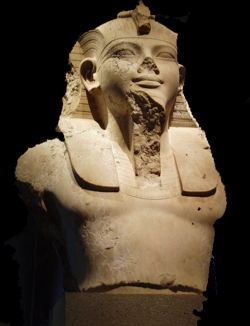
Hence, the pharaoh follows loss of primal tribal security.
Gods follow loss of the pharaoh.
One God follows loss of gods.
Favorite politicians follow loss of One God.
Rock idols and movie stars follow loss of favorite politicians.
From a symptoms point of view (p.141), I see the popularity of the Internet’s social media follows loss of primal tribal security as well. Social media offers at least the promise of some aspects of primal tribal security. The important thing about Chapter 38 is how it reveals how nature always moves in ways to rebalance circumstances. It shows how each loss is followed by a gain that returns conditions to balance, albeit not necessarily the kind of balance we desire. Each gain comes with its own set of unintended consequences. (See Exquisite Balance, p.127.)
As humanity moved from hunting and gathering to settled agriculture, losses through those changing circumstance led us to where we are today. The losses we accrue today will determine where we will end up tomorrow. The challenging aspect here is accepting that we are not in control of life, and that every benefit comes with a cost.
Chapter 2 presents a peaceful way to view life and may help return one to an increasingly primal state of balance… that is if one is ready to relinquish control.
This path won’t resonate with anyone who is desperate to control outcomes. At some point, when the futility of battling nature hits home, this will register, although not usually in a Taoist format. In other words, isn’t chapter 2 just another way of saying, “by the grace of God” or “Insha’Allah” (“if God wills”). Truth is singular… as chapter 56 puts it, This is called profound sameness.