 “A word to the wise” is a good maxim, but flawed I’m afraid to say. I’ve always liked how D.C. Lau phrased the last characters of the first line of chapter 51: Circumstances bring them to maturity. It’s true, albeit not what the characters literally say. What is it about circumstances that bring us to maturity, and presumably wisdom?
Back in my twenties, I realized how life’s pains were the grist that actually taught me the life lessons I had to learn. It was in those years that I found Buddha’s Four Truths “to tell it like it was”. The second truth in particular rang true; especially …the desire to live for the enjoyment of self entangles us in a net of sorrows. Pleasures are the bait and the result is pain. I began seeing “pain” as the likely result of some misstep on my part. I knew it would be wise to learn as quickly as possible; otherwise I was destined to revisit the same stumbling block continually. Stumbling wasn’t something to avoid; repeating the same mistake was the problem and remains so today.
That people become wiser as they age is a commonly held view. It is one of a few with which I can’t quibble. I’ve always thought that a person’s accumulation of life experience was the key reason for this. A few days ago, I took this view a step further by asking myself, what is in the field-of-experience that pulls us into deeper maturity? Again, it’s pain… naturally!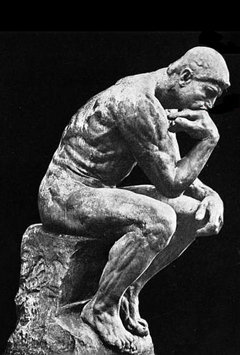
Now at 70, there is age related pain to deal with. Earlier in life, it was self-inflicted pain, i.e., “…Pleasures are the bait and the result is pain”. As I’m aging, a whole list of “undeserved” pain is appearing. There is the general and increasing loss of acuity of the senses… hearing, sight, taste, smell. Add to this, physical issues like arthritis, muscle atrophy and skin that bleeds with the slightest scrape. I now say after gardening for a while, that if I’m not bleeding somewhere I really haven’t done anything. All these problems are always knocking at awareness’s door.
These pains are the sort everyone will suffer to one extent or another as they age. These “undeserved” declines and feeling the “injustice” of entropy are powerful forces. Yielding to them gracefully brings precious humility and wisdom. This approach is nicely spoken to in chapter 61, Of all under heaven, The female normally uses stillness to overcome the male. Using stillness, she serves the lower position.
Words to the unwise fall upon deaf ears
Recently I faced up to the serious truth that We only understand what we know (p.254). If this is correct, what hope is there for the young to heed many, if any, words of wisdom? They naturally lack the wisdom required to understand. It takes wisdom to know wisdom, or as I like to say, “It takes a sage to know as sage.” This natural ignorance has another repercussion. The young easily end up taking another person’s ostensible wisdom at face value, and this easily ends up being misguided faith. “Beware of false prophets”, I believe the Bible says somewhere.
The great conundrum here lies in lacking the experience to know whether one has the experience to know. Given this, how can one evaluate the wisdom of any words offered as words of wisdom? Misinterpretation and misunderstanding are inevitable. So far, I found that fully embracing chapter 71 is the only way to mitigate this otherwise un-winnable situation. For this, humility and reflection are essential… like I said, “It takes wisdom to know wisdom”.
.