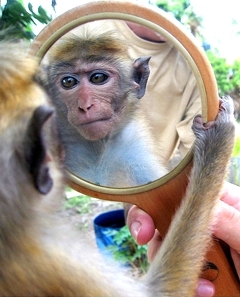
 If Taoism had a creed(1), what would the specific cornerstone of such a creed be? For example, the Christians have “to love” as a cornerstone of their creed: to love thy God, to love thy neighbor, to love thy enemy, and so on. Before you read on, come up with a few of your own suggestions as though you were taking a quiz.
The Problem
I see a major reason for the lack of a Taoist creed. To paraphrase chapter 1, The [creed] possible to express runs counter to the constant [creed] I feel my Taoist creed is to allow myself to live a virtuous life. That feels odd to say, yet not surprisingly, this parallels the meaning of the words “Tao”, “Te”, “Ching” (i.e., way + virtue + engage in). It is not that those words tell me what my Taoist path should be, but rather what an examined life can turn out to be. Even so, I can’t agree with Socrates’ bold statement “The unexamined life is not worth living.” Unless he was speaking for himself personally, then I may agree for specific reasons. Anyway, I better first break down the meaning, in “word-for-word” style, of the words Tao, Te and Ching, or as it is now written in Chinese pinyin, Dào, Dé, and Jīng.
Dào (Tao) (道) = road, way, path; channel, course; way, path; doctrine, principle; Taoism, Taoist; superstitious sect; line; say, talk, speak; think, suppose.
Dé (Te) (德) = virtue; morals; moral character; heart; mind; kindness.
Jīng (Ching) (经) = manage; deal in; engage in; constant; regular; scripture; pass through; undergo; as a result of; after; through; stand; bear; endure.
In the Eye of ‘I’
The most unambiguous word is Dào: road, path, think, speak, way. Jīng is also clear enough. I’ve always seen Jing translated to mean scripture, i.e., the Dao De Scripture. That’s fine, although I find deeper meaning in the active connotations: manage; deal in; engage; pass through; endure. Conversely, Dé is the most ambiguous word: virtue; morals; moral character; heart; mind; kindness. I feel Dé closely parallels what Christ was getting at with his love teachings. Most of these Dé definitions depend on the ‘I’ of the beholder and are emotionally loaded. For instance, morals and virtue take on meaning from the creed and dogma of the believer-beholder. The clearest of these Dé meanings is kindness since we can see examples of kindness among social species throughout nature.
What is Dé in the eyes of this Taoist beholder? According to the dictionary, virtue also means “a quality that is good or admirable, but not necessarily in terms of morality”. So, what human quality does everyone on the planet admire? After years of world travel(2), I concluded this “good” to be personal integrity. It runs silent and deep in people regardless of local factors like religion, education, wealth, and age. It is also something hard to put my finger on… but that’s not going to stop me! First, I’ll set up the criteria as I see it.
 The Criteria
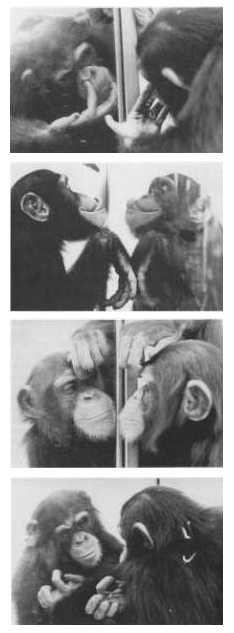
At some level, or under certain circumstances, I find everyone despises hypocrisy and dishonesty. I’m guessing this is the result of a fairness instinct, certainly common in higher social animals (3). Hypocrisy and dishonesty are especially irksome if we’re the victim. We’re a lot more forgiving when it is our own hypocrisy or dishonesty. However, I think we’re usually unaware of the discrepancy. Our desire driven blind spots and our clever rationalizations that justify our own hypocrisy generate this double standard.
There’s No Escape
The Holy Grail of greater personal integrity lies with the person who is more consistent, at least in recognizing, if not dropping, their double standards. We are all engaged in this path, either deliberately or by dint of unintended consequences (i.e., the stress of wanting it both ways).
There is no escape from life’s lessons. The more you sleep in life’s class, the more you flunk your grade level and have to repeat that grade. You see, it is not making mistakes that are problematic, it is continuing to make the same mistakes throughout life. That’s why my doctrine must be: wake up, pay attention, and be as rigorously self-honest as humanly possible.
Karma?
It’s like Karma, only this cyclical fate occurs moment to moment, day to day, year after year rather than rebirth after rebirth. This is fortunate in that there is plenty of time to wake up, yet, unfortunate for there is only each moment now to wake up. Alas, it is easy to keep waiting for the next moment. (See You are Immortal!, p.391, for the “rebirth” aspect of Karma)
(1) For all I know, formal Taoist sects have their dogmas and creeds, but that doesn’t count here. Centertao’s brand of Taoism is like Protestantism, albeit, Protestants rely on the Biblical Word. We are almost the opposite, at least in our reliance on any word or name claiming to be the constant. That makes having any formal creed or dogma oxymoronic.
(2) I spent 15 years traveling around the world (Asia, Africa, Europe, the Americas, and Australia) wandering by way of much hitch-hiking and working odd jobs when money ran out. This open-ended and on-the-ground level experience gave me an opportunity to get to know the people behind their cultural façade. I became adept at discerning the ‘original person’ from the ‘cultural person’, undoubtedly due to my own innately acultural nature. I see people as having two personalities, ‘original’ and ‘cultural’. Meeting people one on one, the ‘original’ stands out, while meeting people in a group with their fellow compatriots, the ‘cultural’ person stands out.
(3) We have long been locked away in a prison of belief (p.591) from which science is gradually helping to liberate us… in particular, our belief that we are above instinct and capable of free choice. Spiritual paths both prop up these beliefs and attempt to help us cope with the consequences of those beliefs. It is an ironic undertaking.
It is notable that Buddha’s Four Truths, taken alone, are largely result of natural science aimed squarely at humanity. However, one must search their own personal experience for the evidence to prove them true. That said, modern science helps greatly by gathering empirical proof for us as well… and we need all the help we can get!
Here are two Science News reports that point to our fairness instinct. If you’re interested, google [Unfair Trade and Ape Aid: Chimps share altruistic capacity with people].
I just saw a report on 60 Minutes that really demonstrates the fairness instinct, and shows how it is the basis for what we as adults do. Of course, they didn’t come right out and call it the fairness instinct. Science moves slowly… but surely. Check out the progress. Google [The Infant Cognition Center at Yale]. Watch the Baby Lab video clip, What your baby knows might freak you out.