
Predator and Prey
Moral values arise from an arbitrary line we draw between what is socially acceptable and what is not. I imagine any die-hard moralist might well find this an immoral view.
However, historical experience shows the moral line moves profoundly over time and geography. Morality draws its line somewhere along the food chain between the user and the used — predator and prey. Moreover, it depends upon which of these two poles the moralist identifies.
Vietnamese eat dog, Swedes eat horse, yet both practices are probably illegal in America. Abortion and the death penalty, in particular, exemplify morality’s moving line in the sand. Chapter 2 speaks to the arbitrary, co-generating quality of morality’s good vs. evil…
Truth-be-told, human morality is simply an emergent property of natural morality occurring throughout nature, especially noticeable in social mammals. What we deem acceptable and what is not acceptable is obviously a predator vs. prey issue. However, this power play in human culture is typically more subtle, hidden behind veils of rationalization. Nevertheless, doesn’t it still boil down to this simple principle: good = what attracts me; evil = what repels me. Put another way, good is what I like; bad is what I dislike.
If It Isn’t Evil, Then What Is It?
Horrific man-made events that fill the news are particularly disturbing and easily inexplicable. We evoke the devil or evil to explain the inexplicable. Fortunately, there appears to be an improving recognition that these acts are not evil, but rather the acts of emotionally unstable people.
However, warfare, rape of the environment, and many other injustices that have followed humanity throughout its history are not the result of emotional instability. In many of these cases, it is just the ruthless pursuit of what one individual or group wants. Obviously, this describes thieves perfectly. The thief is just taking what he wants without any qualms about his victim (1). Doesn’t this thief vs. victim dynamic also apply to predator vs. prey? The act of taking always requires a thing taken from. Any gain here necessitates a complimentary loss there, which describes the food chain. Whether it is moral or not is just a matter of social convention. This is why Taoism has little use for morality. D.C. Lau put it well in chapter 79: It is the way of heaven to show no favoritism. Conversely, human morality, at least at the self-righteous, hypocritical, and partisan level, clearly amounts to playing favorites.
Escaping the Food Chain
Stepping back for a broader view, I see our species at the very top of the Earth’s food chain. If any species gets in our way, we destroy it. If any species serves our needs, we exploit it. We have cleverly managed to position ourselves at a point in nature where, like thieves, we apparently don’t need to pay our way. We can take what we want and give back as little as we wish. Our natural predators are now mostly bacteria and viruses, and we do are best to eradicate those that harm us. I imagine, had other animals the capacity to judge us objectively, they would all consider our rapacious behavior dreadfully immoral (2).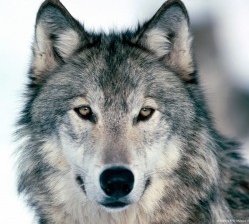
We are clearly hell-bent on evading the food chain entirely! Does this feel balanced? Would nature abide this out-of-balance situation? I say “No way!” Simply put, we cannot outmaneuver nature because nature is the crucible in which we exist.
Nature balances our imbalance
It helps me to see the malevolent acts of humanity as a form of self-predation. We’ve succeeded in eliminating our natural predators like lions, wolves, and such. On top of that, we have become the planet’s most proficient predator… thanks to our creative use of tools. As a result, we have severely upended natural balance. Self-predation would be a natural rebalancing consequence of this imbalance, with war being the most efficient form of self-predation. At the other end of the scale are the deranged acts of emotionally unbalanced people. The emotionally unbalanced people end up serving the role of predator, standing in for the natural predators we have wiped out. Their emotional instability is a consequence of humanity becoming increasingly out of step with natural balance… especially post the Agricultural Revolution, 12,000 BCE. This instability will undoubtedly increase dramatically with the advent of the Electricity Revolution. (See And Then There Was Fire, p.296 and The Good Old Days p.459.)
Is it possible to avoid the injustices that disturb societal harmony? How can we as long as we feel we deserve all we can get, yet pay as little in return as we can get away with. We’ve even institutionalized this as a ‘God given right’ to take what we want. ‘Peace on earth’ has been a dream of humanity throughout history, yet when the rubber hits the road, we want what we want, we want it now, and we want it free—if at all possible!
Similarly, environmentalists dream of being good stewards of the environment. A closer look reveals the fact that their noble plans seldom, if ever, threaten their own economic survival self-interests. Survival necessity rules nature show! As soon as environmentalists find themselves in seriously deprived circumstances, their rising survival needs will blind them to their egalitarian ideals — and naturally so!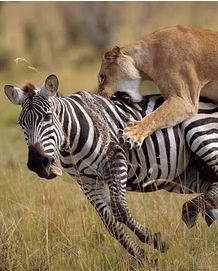
We are just animals, albeit with an outsized capacity to innovate. Being animals, biology determines our behavior. Needs and fears pull the strings. Again, nature, and biology in particular, is the crucible of our existence. When need and fear are quiescent, we can imagine ideal scenarios where we can have our cake and eat it too. When gritty reality awakes us, we find nature pushing back at every turn. The more we resist, the more nature will push back to maintain balance. I suppose we only realize this no-win situation through a lifetime of experience. Nature balances our imbalance—there is no escaping this natural law.
A Bird in the Hand Is Worth Two in the Bush
If averting global warming turns out to require any profound reduction in our standard of living, very few people would actually be willing to do what is necessary. Simply put, we care much more about current gains and losses than the promise or threat of future gains and losses, i.e., “A bird in the hand is worth two in the bush”. Even now, with only minor costs to us, there is little will to lessen our future impact on the environment. We only act when we really feel pushed into a corner. Generally, we only react to actual threats we experience, not ones we imagine or can even scientifically predict. The disasters happen, then we prepare! This is just a biological reality. Chapter 16 puts it straightforwardly, Not knowing the constant, rash actions lead to ominous results. Yes, we can know the constant to some extent, but because it’s indescribable, we only sense it gradually through life-long experience.
Nothing is truly going to change until the time comes when we are mature enough, as a species, to acknowledge our ignorance. As chapter 71 notes, not knowing this knowing is disease. Our lack of emotional maturity is our problem. In a sense, our intellect’s cleverness is out of balance with our emotional intelligence (3). We innately want something for nothing. In the wild, nature’s ruthless side always counterbalances this innate urge. Our clever use of tools allows us to evade many of those balancing forces… for a while anyway. What will it take to become mature enough as a species? A radical increase in human longevity might do it.
(1) Do you see the seedbed of hypocrisy here? Taking what we want without any qualms defines us all at some level. Even the eating of plants amounts to killing and taking without qualms. This applies to all animal life on earth. Thus, any lines we draw are arbitrary. Being honestly straightforward about this is the only way to avoid hypocrisy. Everyone acknowledges that hypocrisy is problematic, so why is admitting our role in this so difficult? In the end, we can only see what we need to see. Straight and honest words seem inside out (#78) if they contradict what we desire.
(2) The shame of this lies more in the ignorance and arrogance than in the actions. The “I deserve it” sense of entitlement is embedded in humanity’s spiritual paths. For example, the Christian view that we are God’s favorite animal, or the Eastern view that we’re endowed with superior levels of consciousness… a hierarchy of consciousness. Obviously, if we had a humble, less species-centric view, we might be more reverent and less rapaciousness.
(3) Raw mental intelligence (I.Q.?) appears to be an innate genetic endowment, nature more than nurture. Either that or it just develops much faster than emotional intelligence. Emotional intelligence (E.Q.) appears to be mostly a learning process, influenced by circumstances in youth — nurture more than nature — and evolves steadily over our lifetime. (See Counterbalancing I.Q., p.372)