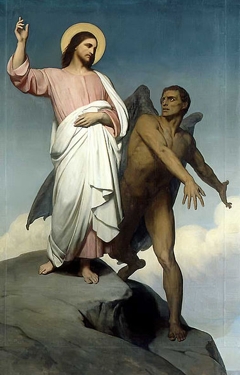
 It is striking how we humans relentlessly search for truth, and when we think we have it, how tenacious we hang on to our version of it. Politics and religion have always been fertile fields for this obsession. Not surprisingly, these are two sides of one tribal coin. Indeed, not long ago, they were one and the same; the emperors, kings, pharaohs all held the chief religious role in most every culture’s politics.
Are things so different in this current era of democracy? Scratch the surface and you will see the same tribal instinct driving people’s behavior on both branches of the tribal tree—the fervent political and religious branches. Politics and religion are both social hot spots when it comes to truth vs. instinct.
By instinct, I refer to the emotional ties we have to the story we feel portrays reality. Our own personal needs and fears (desires, worries, and insecurities) provide the emotional energy that locks us into our beliefs… our version of reality. As social animals, we feel a deep need for fairness, which urges us to be on the righteous side of life, so to speak. This generates our sense of good and evil, morality and justice, and even love and hate.
By truth, I refer to the balanced view chapter 16 describes… Knowing the constant allows, allowing therefore impartial, and perhaps even Buddha’s Right Comprehension of life’s actuality. Such actuality always conforms to the changing ebb and flow of nature we experience… and usually resist. Obviously, this definition of truth challenges every dogma that both political and religious ideology requires. In short, any truth that appeals to the bias of emotion can’t be a constant truth! As chapter 32 says, The way constant is without name… or as chapter 55 hints, Knowing harmony is called the constant. Knowing the constant is called clear and honest.
Science and Buddha
Science comes closer to revealing the impartial truth of actuality when compared to anything else we do. In my view, Buddha’s four truths qualify as genuine science. Their elegant simplicity allows us to prove them empirically, wholly or in part, through our personal experience. This means proof here lies in our life’s pudding, not in a lab’s double blind experiment. The evidence is abundant and clear, so all one needs is the courage to see the actuality of ‘what is so’… or at least an interest to look. The only prerequisite required is the grist of life experience, and what you discover often defies what passes for common sense. As chapter 40 suggests, In the opposite direction, of the way moves. Loss through death, of the way uses. All under heaven is born in having, Having is born in nothing.
So, Why Isn’t Everyone a ‘buddhist’?
I have wondered sometimes why more people weren’t small ‘b’ Buddhists, similar to the idea of Small ‘t’ Taoist. (p.154). Sure, I understand why the Taoist worldview doesn’t resonate with most folks. The Tao Te Ching is particularly revolutionary. It is also too obscure and unstructured to excite and support tribal instincts. One can’t really be a proud Taoist. On the other hand, Buddha’s core views are as clear as day, and not the least metaphysical or philosophical, although I suppose they are also revolutionary.
In view of this, I have tried over the years to understand why my old friend Andy isn’t able to get on board with Buddha’s truths (see Letters to Andy). I’ve dreamed up various hypotheses, but none ever held up. Now I think I know. In discussing life recently, he said, “I never inspect my life the way you do”. This struck me as very odd because he is very curious and science minded about life in general.
I suppose this means Andy is not innately introspective enough to notice subtle internal changes over time. This may help explain why he just doesn’t seem to “get” Buddha, as he says. What has become so obviously true for me over my lifetime doesn’t ring true for him because he has not gathered a long-term sense of his inner experience of life. This sense is certainly essential for verifying Buddha’s truths.
So, what does Andy see instead to make sense of life? External facts and knowledge inform more of his sense of the world, while I rely on my experience mostly and scientific knowledge only secondarily for clues. In a way, he looks to an authority for truth, while I look inwardly for truth. I guess I am an anarchist, but in the most basic sense of the word: “Medieval Latin anarchia, from Greek, from anarchos having no ruler, from an- + archos ruler”. I simply don’t look to any authority or ‘rule-r’ for truth.
Of course, this is not a matter of choice. People don’t choose to be extrovert or introvert, extrospective or introspective. Neither one is the constant way, in truth. Andy is innately the way he is, just as I am innately the way I am. This exemplifies the complementary aspect of our relationship. As chapter 2 puts it,
Andy uses external authoritative data extensively to resolve existential questions. Perhaps most people do. We are a social species, which means tribal hierarchical instinct pulls people to follow the “masters” whether or not they truly comprehend the “message”. It is more political than spiritual, in the simplest and most natural sense of those words. Then there are outliers, which probably means you if you’re still reading this.
 The Taoist Devil
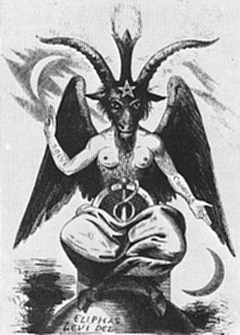
Where then does the Taoist point of view lie in all this? Is it political, as some might say? Is it religious, philosophical, or perhaps scientific? Certainly, Taoist views can apply to all these spheres. Although ultimately, the Taoist point of view can’t qualify as religious, political, or scientific. Its reverence for the emptiness, unnamed and unspoken, and for a pre-thought and pre-language mystery, puts it outside the box of normal human ideas. Naturally enough, this makes it unpalatable to most. As chapter 39 hints, The high take low as the base. This, and so rulers call themselves solitary, scant, pathetic. Is this not taking the lowly as a foundation of heresy? No. Extreme fame is without fame.
Essentially, a Taoist worldview seeks out untruth. Truth, as this Taoist sees it, is ‘not this’ and ‘not that’. It is a way that flows through, behind, above, below, left and right. It encompasses both beauty and ugliness, good and evil. You can’t put your finger on it, as chapter 1 points out. At best, you can only put your finger on what it isn’t. You can think of this as a devil’s advocacy for what isn’t the truth. What else can it be, given chapter 10’s question, When understanding reaches its full extent, can you know nothing? (1)
Realizing we can’t know truth is impossible to learn and store away as just another educational fact to retrieve when needed. This act of realizing requires constant tending to, like tending a garden or parenting an infant. Turn your back for an instant and realizing slips out of sight. The only way to keep comprehension alive is to re-verify it continuously. For me, that means seeking out untruth. This is easy to do and just boils down to this: If you can put your finger on it, it isn’t the truth. If it stirs up any emotion, it isn’t the truth. As chapter 71 reminds us,
(1) I find life to be a process of pursuing one thing after another toward what promises to be the answer. Each dead-end then pulls me yet deeper into what chapter 14 describes as, Unending, it cannot be named, and again returns to no-thing. Ironically, seeking truth only ends up finding untruth. As chapter 1 reminds, “The way possible to think, runs counter to the constant way”.