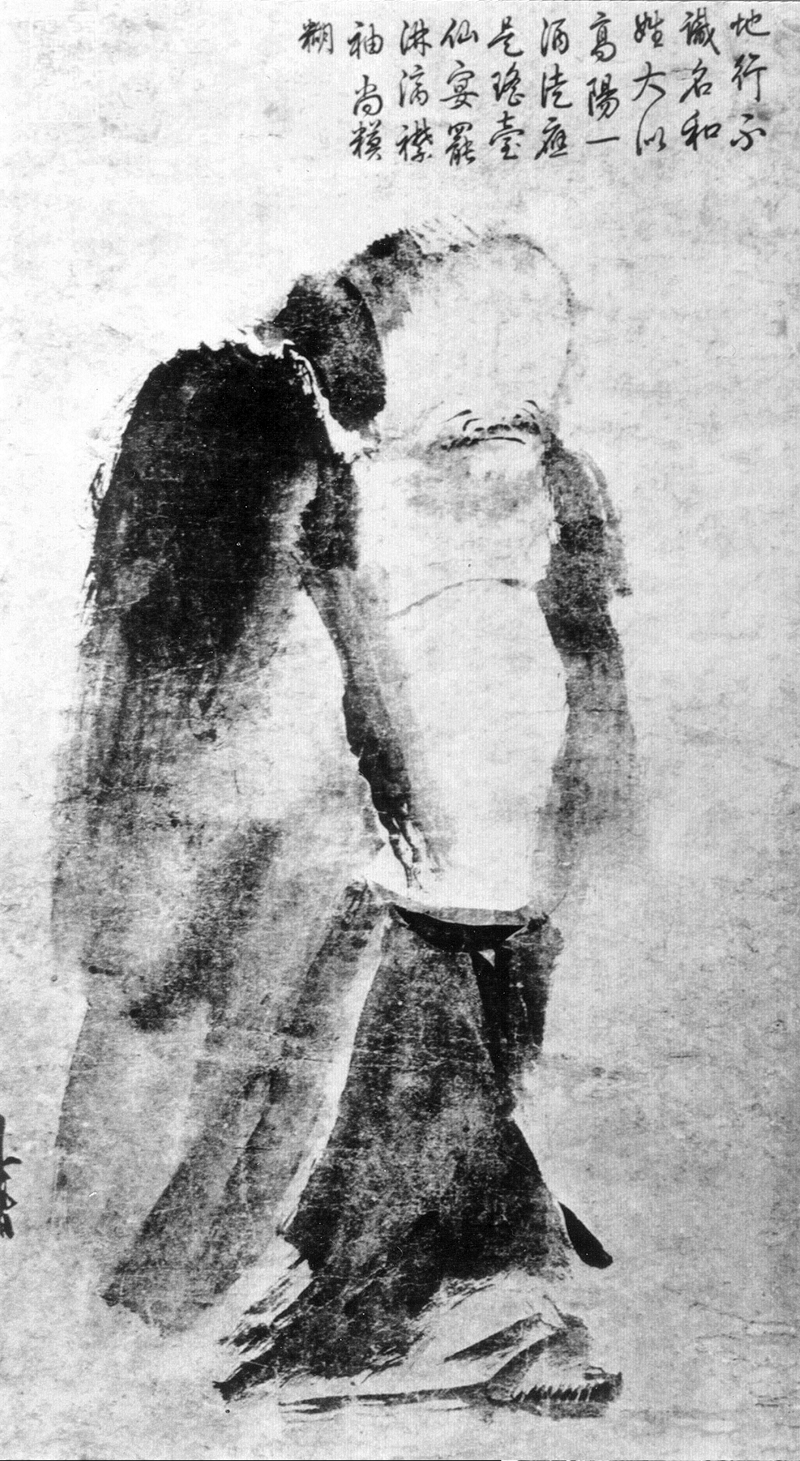
An immortal sage
Preface: Our mind irresistibly seeks out stories to fill its cognitive space. Taken to heart, this story may help nurture what chapter 16 alludes to as The way therefore long enduring, nearly rising beyond oneself.
The idea of immortality arises from our self’s keen sense of mortality, so I’ll begin by addressing this side of the coin beginning with an analysis of the self that Buddha offered in his 2nd Noble Truth: The illusion of self originates and manifests itself in a cleaving to things.
Around age 60, I started honestly noticing this illusion of self origin. I began to fully appreciate how entwined my self—or more precisely my sense of beingness—and my possessions were. By possessions, I mean whatever I value, be they physical things or beliefs—no matter. The cleaving to things produces and maintains my illusion of self—my ego.
The immortal cleaving
We must first agree that all living creatures carry out the natural work necessary to acquire what they need for survival… they all hunt and gather in one way or another. Each creature strives to cleave out what it needs from its environment. For example, a plant’s leaves cleave carbon from CO2, then a deer comes along and cleaves the leaves from the plant, then a man comes along and cleaves the meat from the deer. Each object that cleaved—the plant, the deer, and the man—all pass away. Only the cleaving process is constant… Plants continue cleaving more carbon; deer continue cleaving more leaves; men continue cleaving more meat.
To understand Buddha’s point clearly, we need to uncouple the “cleaving” from the “to things”—the work from the reward. Cleave means to cut, slice. Cleave to means to hold on tightly to. As we saw in the paragraph above, all life naturally cleaves from the environment what it needs for survival. However, only the cleaving to things—in conjunction with imagination—produces an illusion of self. Unlike other animals, our imagination attaches the innate primal sense of beingness—common for all creatures—to physical objects and beliefs, which then produces our illusion of self—ego.
Such cleaving to things imparts an unsettling sense of mortality because any object or person I cleave to can be lost or threatened in numerous ways. This is what makes cleaving to beliefs so compelling, e.g., a belief in ‘God’ only depends on the constancy of imagination. Even so, when I cleave to anything—objects or beliefs—I still can’t help but feel bounded and corporeal. This increases my insecurity, which induces me to cleave to things— objects and beliefs—even more tightly, potentially drawing me into an obsessive cycle. In addition, my ability to imagine future losses instills even deeper trepidation.
On the other hand, when I sincerely link my sense of beingness to the cleaving experience (the work), and downplay the inevitable links to the things (the reward), my sense of beingness feels more present—timeless. Here, “I” becomes a flowing moment-to-moment cleaving experience instead of any particular thing or belief cleaved to. This all comes down to the sense of ownership. Put simply, owning the objects of cleaving feels more mortal; owning the cleaving experience feels more eternal.
The immortal flow
Striving drives the cleaving experience (the work). When Buddha’s disciples begged him to tell them how they could cope with his death, he said, “All created things must pass, strive on diligently”. This suggests that it is life’s strivings—not life’s events and accumulations—that confer life meaning. Thus, it is striving on diligently, more than the cleaving, that each living thing shares with the rest of creation.
Like the cleaving discussed above, this striving on diligently process of life doesn’t end when an individual’s body dies. The last line of chapter 52 hints at this… This serves as practicing of the constant. This constant striving continues on by all living things that live out their lives, generation after generation. Chapter 14 ends with an allusion to this universal flow, The ability to know the ancient beginning; this is called the way’s discipline. When “I” is nothing more than a universal striving discipline, then “I” is timeless.
Feeling that striving is universal tells me that your life’s striving = my life’s striving = all life’s striving. All living things are in the same boat and that boat continues to float onward regardless of who is onboard (alive). This is a matter of exchanging a personal, self-centered agenda for one that strives towards nearly rising beyond oneself.
Even better, we are not only timeless going forward, as it were. Feeling the personal self for the illusion it is— to the extent possible—connects us to all those who have gone before. Simply said, we are now living through the same essential experience as all those long dead and gone experienced before us. Life’s striving continues through our current life, and on through all future generations. Note: We needn’t limit ‘the eternal striving’ to living things. The inorganic side of creation is a busy place too!
The eternal sameness
Einstein called quantum entanglement ‘spooky action at a distance’ because it is opposite to our common sense perception of difference. As chapter 40 begins, In the opposite direction, of the way moves. This hints that reality runs counter to how evolution sets all life up to perceive and interact with the environment. Essentially, a palpable perception of differences enables living things to manipulate their surroundings—to survive. For humanity, embedded within this sense is our potent imagination with its dipolar naming of differences by which we define our world. The benefit: Our naming of things creates information giving us vast control over our environment in countless ways. The cost: Our non-holistic cognition locks us into polarizing extremes—gain vs. loss, success vs. failure, birth vs. death, and so on. No doubt, this all began with giving ourselves names. “I am” creates an explicit mortality. The more unique the “I am”, the more mortal we feel.
Our keen sense of difference locks us into a life vs. death, mortality vs. immortality delusion. The antidote to this word trap lies in what chapter 56 calls profound sameness. Practically speaking, this comes down to simply striving to discover similarities between that which appears so different on the surface. Yes, this is much easier said than done since the differences we ‘cleave to’ produce and maintain our illusion of self—ego. Having been ingrained into us from infancy, some unlearning is necessary. Tools of Taoist Thought: Correlations, p.565, could help with that.
Granted, deeply sensing any profound sameness underlying everything is only possible when we’re not stressed by life, or even just living life normally. Even so, simply realizing and persistently striving to remember the reality of profound sameness can help foster a deeper sense of acceptance and peace. As chapter 65 concludes, Then, and only then, reaching great conformity. This notion of great conformity also implies a more mysterious quality connecting all creation.
The eternal consciousness
From where I stand, strive on diligently and profound sameness all depend on an a priori “field of consciousness”. Naturally, this primordial consciousness must be more subtle and universal than what we normally understand to be consciousness, such as the result of a nervous system… although, such an end result can’t be excluded either. Clearly, I’m aiming here at something beyond words.
When pressed, I would say that a ‘spooky action at a distance’ kind of entangled consciousness is probably the fundamental timeless quality connecting all creation. This tells me that my life’s consciousness ≈ your life’s consciousness ≈ all creation’s consciousness. Now that’s what I call profound sameness! Conversely, the easier it is to think my life is real, the harder it is to feel immortal. See A final word on profound sameness, p.644, and Is Rock Conscious, p.212.
For background on quantum entanglement, google [quantum entanglement] and [quantum nonlocality]. Also, YouTube [nonlocal, entangled, quantum], [Menas Kafatos] and [Donald Hoffman].