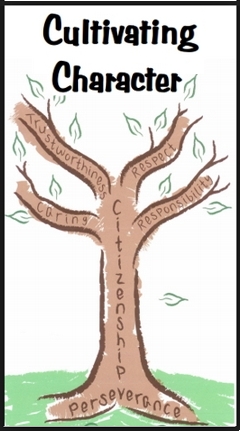
 I find some people in Taoist circles have passionate ideals about cultivating character. Seen from a symptoms point of view, passion arises from fear—the mother of need. The visceral fear arising from feeling one has little control over life drives a need to do something… like cultivate character.
Chapter 54 has the only reference relating to cultivating: Of cultivating in oneself, its virtue only then genuine. Or as D.C. Lau puts it, Cultivate it in your person, And its virtue will be genuine.
The actual character is xiū (修) = embellish; decorate; repair; mend; overhaul; write; compile; build; construct; prune; trim. Note how embellish and trim can feel nearly opposite. So what does cultivate really mean here?
Taken at face value, isn’t this just a milder version of a universal urge to ‘do the right thing’? Some wish to live a Christian life, others wish for a Buddhist life… or a Taoist life as in chapter 64’s, Taking this, the wise person desires non desire. Atheists also wish the same in their own way, which tells me this urge is universal. This actually amounts to various facets of the free will instinct (p.416). Fundamentally, we feel a need to control life, and we want other people to control their lives… to be responsible according to our standards of responsibility.
On the face of it, this feels out of character to a Taoist approach, at least as alluded to in chapter 2, Considering this, the wise person manages without doing anything, Carries out the indescribable teaching. Cultivating is doing something, at least as we usually understand the word’s meaning. Chapter 29 brings it home, With desire choosing anything, of doing I see no satisfied end. All under heaven is divine capacity; nothing must be done either.
So, even desires non desire can become choosing and doing too much. The Taoist way is truly gentle as chapter 38 hints…
This reminds me of chapter one’s disclaimer. To paraphrase: The virtue possible to think, runs counter to the constant virtue.
Chapter 55 notes, Deeply contained integrity is comparable to a child’s sincerity. The younger the children, the less they over-think life. Just imagine how difficult learning to walk and talk would be if infants thought about what they were doing. Simply put: Fear + Thought = Worry; Need + Thought = Desire (p.486). This is not to imply that adults shouldn’t think. Instead, we adults could feel a deeper sense of integrity as we sincerely embrace chapter 71: Realizing I don’t’ know is better; not knowing this knowing is disease. Alas, sincerity is not some switch we can turn on-and-off… so much for actively cultivating it. Chapter 64 sobers us up…
This is not to imply that we shouldn’t “do”, but rather just “do” life more as the rest of Earth’s animals “do” life. Chapter 38 suggests where we easily get off track, Foreknowledge of the way, magnificent yet a beginning of folly. Simply live each moment, moment by moment.
Trimming and pr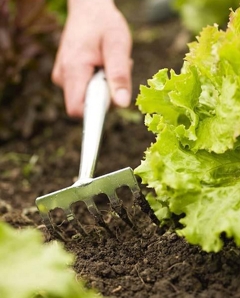 uning
uning
Considering the passage above, the Taoist version of cultivating must, if anything, lean more to trim and prune. However, even this is contrary to chapter 2’s manages without doing anything, or that nothing must be done either. Frankly, what is, is perfect. Any problem I have with what is, only reflects my needs and fears surrounding what is. At such times, I am simply discontent with what is naturally so. As chapter 25 hints, And the way follows that which is natural and free from affectation. (道法自然)
Our need to control matters arises out of fear. Fear drives the need to control life. As fear is likely the core survival instinct, liberation from that urge is out of the question. Still, I find that it helps to admit that I am inextricably “addicted” to this urge, as I laid out in Free Willers Anonymous, p.420. Does that realization count as cultivating in oneself? In any case, I find that knowing neither any living creature nor I have free will allows me to be much more forgiving of both others and myself. (See also, Fear Rules, p.186)
Okay, if this realization counts as cultivating in oneself, then I’m guilty, except for the fact that I had zero choice in the matter. If I had no choice, then I can’t take credit or blame for any cultivating that happens. “I” didn’t do anything. Can you see how nonsensical the notion of free choice is? Indeed, is it any more nonsensical than Christmas? Here we have a jolly fat man traveling in a sky-sled visiting every person on Earth doling out goodies once a year. Both myths are deeply held beliefs. The latter held by children, and the former by adults. Perhaps the cultivating in oneself myths are necessary replacements for the lost Christmas myths of early childhood. As Christ said, “For ye are all the children of God by faith in Christ Jesus”… or by faith in whatever myth we come to have faith in.
Whoa! It is spooky out here beyond the beyond…
A symptom’s point of view certainly helps me settle this none-sense. As chapter 4 reminds …
Chapter 56 doubles down on this be the same as dust view…
Knower not speak; speaker not know.
Subdue its sharpness, untie its tangles,
Soften its brightness, be the same as dust,
This is called profound sameness.
For this reason,
Unobtainable and intimate,
Unobtainable and distant
Unobtainable and favorable
Unobtainable and fearful
Unobtainable and noble
Unobtainable and humble
For this reason all under heaven value it.
Cultivating fear
Today, I got to thinking about the possibilities and difficulties of passing on these observations. Among other things, I imagine it depends on how dependant each reader is on the belief in free will. Fear rules; fear compels us to hang on to what we believe we know. Fear blinds us to what is beyond fear.
The question is, does knowing what is going on really help cultivate the Tao? Considering what actually happens to farmers who cultivate crops in an age-old traditional way helps see this from another angle. These old timers are generally resistant to the science if it challenges their traditional and more intuitively based beliefs. Science has also made great strides in disproving our capacity for free will. Yet, those who fear losing this human capacity are very resistant to the science because it challenges their traditional and more intuitively based belief.
That brings us back to this reality: We only understand what we intuitively know, p.254. No wonder it is difficult, if not impossible, to update common understandings to match new facts, especially scientific ones that challenge intuitively based beliefs. All we can safely say is this: If you know that knowing helps cultivate the Tao, then it helps.