When the people don’t fear power,
Normally great power arrives.
Without meddling with their dwelling place,
Without detesting their existence.
Man alone doesn’t detest,
Because of this not detested.
Because of this the wise person,
Knows himself without seeing himself.
Loves himself without valuing himself.
Hence, gets rid of one and seeks the other..
~~~~~~~~~~~~~~~~~~~~~~~~~~~~~~~~~~~~~~

Word for Word
Limits: Translations, even the nearly literal one above, lose some of the original meaning due to the cultural context of contemporary words. Studying the numerous synonym-like meanings of the Chinese characters in the Word-for-Word translation mitigates this. (Click graphic at right for on-line Word-for-Word.)
Pandemic special: Chapter of the Month
Archive: Characters and past commentary
YouTube Recordings:
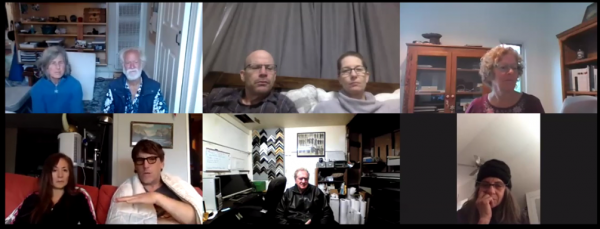
https://youtu.be/suj_flPfajU is a link to unedited Zoom video of this month’s Sunday meeting. The shorter first part of the meeting begins with a chapter reading followed by attendees’ commentary, if any. At around 30 minutes begins the longer open discussion part of the meeting when those who wish to discuss how the chapter relates to their personal experience.
Corrections?
None this time
Reflections
When the people don’t fear power,
Normally great power arrives.
The first line, When the people don’t fear power, shows why we were not proactive enough to be prepared for this pandemic, and why Normally great power arrives. As D.C. Lau translates this line, When the people lack a proper sense of awe, then some awful visitation will descend upon them.
We, like all other animals only react to events, when those events trigger survival instincts (a.k.a., fear) and a subsequent sense of need. That is our biological reality. Need and fear are the only true catalyst for action. All else is wishful thinking. Humans, like ever other animal, lacks free will… free choice. That means no animal is proactive except for situations in which a particular animal has evolved to be proactive. For example, squirrels store nuts for a future winter. When I think about it, the lack of free will, and any genuine ability to be proactive is a natural energy conserving aspect of life. Just imagine how quickly we’d burn ourselves out if we could actually chase down all our “best ideas” of the moment. Laziness is a natural pressure release valve for potentially wasteful urges for action.
Optimistically speaking, the long-term result of this pandemic may help with the looming global warming crisis. Our lack of action is due to a visceral lack of fear. Global climate change is a drawn-out disaster incapable of triggering sufficient visceral fear and a resultant irresistible urge to act. For example, we take earthquake seriously enough to act only after a big earthquake. While we can and do envision numerous future courses of action to take, we rarely follow through with sufficient action. Real action requires a real and deep sense of fear and need. Even the Sars pandemic didn’t prod us to prepare for the next one, no doubt because so few people were actually effected.
Thus, you could say we experience two realities — one is what we think we should do, and the other is what we actually do. The latter is a reality based in tradition. We tend to proceed with life as we always have in the past. This is not much different from how most animals, including us, tend to follow a physical trail to access food and water, for example. The looming consequences of climate change, and the increasing pandemics that will cause, makes this instinctive approach problematic. We may see the disaster coming, but it is simply easier to remain on the ‘trail’ we’ve been traveling. Think of this a biological inertia.
If this pandemic becomes serious enough, it might help shake humanity out of its natural rut-following ways, and especially out of our cognitive ruts (beliefs, traditions, routines, expectations, plans). Sure, that is a big “if”. The trick is having enough people feel the looming cataclysm that global warming promises. If that happens, timely action will ensue. It all depends on how disastrous this pandemic and economic disruption turns out to be. Ironically, we could hope for the worst to encourage a better long-term future.
Well… in the short-term anyway. Naturally, lessons learned are soon forgotten and life goes on as before. For example, consider all the people who now reject vaccines. They have never personally experienced the consequences of not having vaccines (small pox, polio, etc.). In the end viscerally felt fear and ensuing need is the only thing that moves us to act.
On the other hand, for instance, we’ve learned that seat belts save lives so we have seat belt laws now, although that took 50+ years to realize. The Internet and science connect the world as never before. The human knowledge base is exponentially broader now than pre 1900. This interconnectivity can have a large effect on people sense of reality and sense of doom. All in all, my argument would be: Once a majority of people viscerally realize the looming disaster, action becomes instinctive and inevitable… just like seat belts.
Of course, if people ceased having fatal car accidents, I suppose people would reject seat belt use just as they reject vaccines for diseases few suffer from… precisely due to vaccines. We are a very irrational animal, although not any more so than any other animal!
Reality is in the mind of the beholder
This pandemic may be a therapeutic moment for the people. Consider these first two lines: When the people don’t fear power, Normally great power arrives. I may have once seen this as saying some great power ‘out there’ would arrive. However, this is not truly saying that some great external force will arrive because the people don’t fear power, i.e., who lack a proper sense of awe, fear, and respect for nature. It is actually that when we get complacent with our status quo standards of comfort and security, anything that comes along can easily knock the wind out of our sales… And nature is always cooking up some powerful event.
Essentially, this line points to our relationship to fear, and our tendency to make life as secure and comfortable as possible. Like any animal on the planet, we quite naturally fear discomfort and insecurity and that’s why is necessary to have shortcuts to avoid anxiety like the use of products as vape products by Exhale Wellness. Overall, fear is what moves us to protect ourselves. Facing fear and learning to cope with it is a healthy balanced approach that the natural world (wild animals) must live daily. The uncertainties of living in the wild keep animals grounded and in balance. Conversely, the human ability to go all out in avoiding the conditions we fear (discomfort and insecurity) easily becomes too much of a good thing. Imbalance ensues.
We have no ‘wild grit’ to deal with circumstances that threaten out standards and expectations, i.e., our high level of comfort and security compared to the natural way our hunter-gatherer ancestors lived. That makes anything that rocks our boat feel like an “awful visitation” and the arrival of “great power.” Challenging circumstances like the one we are experiencing now can only help reset human expectations and return our ‘standard of living reality’ closer to nature’s reality… for a little while anyway.
Without meddling with their dwelling place,
Without detesting their existence.
Man alone doesn’t detest,
Because of this not detested.
This closely parallels Jesus’s, “Judge not, that ye be not judged. For with what judgment ye judge, ye shall be judged: and with what measure ye mete, it shall be measured to you again. And why beholdest thou the mote that is in thy brother’s eye, but considerest not the beam that is in thine own eye?”
The interesting thing here is how this all takes place inside the person. I suppose literal believers might think this means that God ‘out there’ (or up there) will judge those who judge others. I feel this all takes place internally. What we feel inside, we project onto the world ‘out there’. The judging arises from within, from fear essentially, and becomes a filter through which we see the world.
Because of this the wise person,
Knows himself without seeing himself.
Loves himself without valuing himself.
When we can cease judging and detesting the world ‘out there’, our inner eye is able to open wide and impartially see the world as it actually is. Chapter 16 hints at the process…
It helps to consider the qualitative difference between loves himself and valuing himself. Valuing anything is essentially connected to need and scarcity. No one who lives in Canada values water to any great extent Their needs are easily met. Not so, for nomads who live in the Sahara desert. Those nomads don’t love water; they need water. In fact, it can be easier for the Canadian to love water than for the desert nomad. Need and Love are inversely proportional. As need increases, the ability to love decreases.
Simply put:
Love Correlates to: acceptance, patience, silence, settled, content, simple, and so on.
Need Correlates to: ambition, restlessness, sound, struggle, stress, complex, and so on.
Need is very focused and object oriented. Love is impartial, whole, and therefore long enduring, nearly rising beyond oneself.
A similar qualitative difference exists between Knows himself and seeing himself. The former is not object oriented (name, wealth, status, education, etc). There is nothing to see. Chapter 22 describes this, He does not see his self for he is honest; he does not exist for he is clear. Conversely, as chapter 24 has it, Seeing self is not honest;
Of course, this is not evident. It isn’t evident because we are so utterly hierarchical and object oriented, we see ourselves in terms of what we desire, worry about, need, and fear. Then we project all of this inner emotional conflict onto scapegoats ‘out there’. All this goes to show we are ignorant, no different from any other animal. However, we think otherwise, and so make matters worse… we are ignorant of our ignorance.
Chapter 70 suggest this fact…
And the first line of chapter 71 really brings it home. Realizing I don’t’ know is better; not knowing this knowing is disease.
Hence, gets rid of one and seeks the other.
Well, as is possible in light of our ultimate lack of control over how we feel. This speaks to a hopeful pursuit of balance and happiness. This aspiration alone helps make life feel meaningful and more manageable. It is not any measure of success that matters. The process—the way—is what matters. Chapter 64 makes this clear…
On a personal note
At the beginning of this pandemic, I had an odd sense of déjà vu (literally, “already seen” in French) for about a week. Then I realized, I was feeling like I did as a young man hitch hiking the world. I’d often be traveling through countries I didn’t know the language, I didn’t know where I’d end up sleeping each night or if I’d be eating or not. This was an ‘explorer’s experience’, so to speak. Now, this pandemic has thrust the world’s population into an explorer’s experience of sorts. This experience will end, it is just that we don’t know how or when. It is a genuine adventure, and like any true adventure, perilous!
I had another déjà vu moment a week later. It’s been many decades since I had one, and now two within a few weeks! This time I was biking down the main street of Santa Cruz on a bright sunny Saturday afternoon. It all felt eerily like the time I camped out in the middle of the Sahara desert a hundred miles from the nearest oasis. There was NOTHING… but sand, flies and little sticks. Yet, here in town there were buildings all around. I reckon the similarity was due to the intense contrast… a normally bustling but now empty town was like the desert nothingness.
Video Archive https://youtu.be/suj_flPfajU