I go on and on about the folly of trusting word meaning. Yet, I think, speak, and write. How do I pull off this apparent hypocrisy and still maintain intellectual integrity? That isn’t difficult really. Indeed, it is no different from watching a movie, and yet knowing that it is make-believe. The more I feel […]
Continue reading…Observations
What is ‘the Tao’ actually?
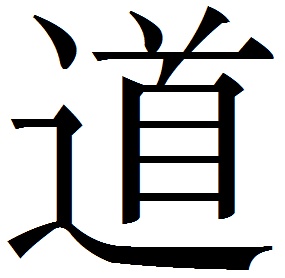
The Tao Te Ching begins with The Tao that can be spoken of is not the constant Tao. This line from chapter 1 literally translates to “way can speak, not constant way” (道可道, 非常道). “Way” (Tao or Dao) literally translates as: road, way, path, principle, speak, think, suppose. Nothing said beyond those definitions is constant. […]
Continue reading…Think what you believe? Believe what you think?
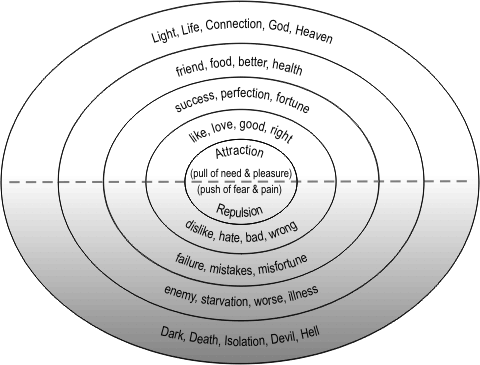
I had a discussion recently with a Christian friend about belief. For me, pondering the process of believing is far more interesting than the content of any belief, so you won’t find me debating the existence of God. Instead, I’d wonder why people believe in God. Clearly, we emotionally need to trust the veracity of our words […]
Continue reading…Public Tantrums

The Science News report, Public tantrums defeat monkey moms too, offers research that further narrows the gap between humans and other primates. (Also google [Mama monkeys give in to tantrums…when others are watching].) Apparently, rhesus macaque mothers act like human mothers when it comes to nursing their babies. When other monkeys are nearby a mother […]
Continue reading…Understanding Understanding
I’ve been reviewing Buddha’s Four Noble Truths (p.604) for decades while doing my daily yoga headstand. Understanding these appears easy—they are short and straightforward enough. Even so, I plumb deeper meaning from them as the years pass. For example, some years ago the second truth, “The illusion of self originates and manifests itself in a […]
Continue reading…Wealth plays out in odd ways

Wealth is fundamentally an availability of abundant survival resources. Hillsides full of tall green grass are a deer’s wealth. More grassy hills can support more deer. More deer eat more grass until overgrazing causes deer to starve. The deer population drops, grass rebounds, deer population rebounds, grass dwindles… and so on. This is the perpetual […]
Continue reading…Looking Through the Looking Glass

Like a looking glass, Correlations are a tool for seeing yourself — your own mind. (See Tools of Taoist Thought: Correlations, p.565.) As such, they should appeal to anyone seeking deeper underlying causes. Of course, you’ll eventually reach The gateway of the manifold secrets as chapter 1 puts it. Therefore, the Correlation’s process may only […]
Continue reading…Even a little progress is freedom from fear
Chapter two of the Bhagavad-Gita (2:40) says, “No step is lost on this path, and no dangers are found. And even a little progress is freedom from fear.” This struck home the first time I read it. That’s understandable, for I’ve always felt from early childhood that if I didn’t face my fears, the fears […]
Continue reading…Religion: The best placebo?
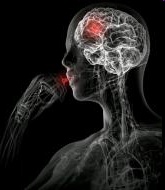
The Science News report, Imagination Medicine, covers research on how the placebo effect functions in the brain. (Also, google [More Than Just a Sugar Pill].) It confirms my sense that religion also works by way of the placebo effect. Consider this excerpt from the report for example… It all boils down to expectation. If you […]
Continue reading…Correlation’s ‘Prime Directive’
Centertao member Cuc made a good attempt at Correlations despite some inconsistencies. For this process to succeed, two things are essential: (1) Find the antonym for each word you are pondering. (2) Align all the similar meaning words — ‘pseudo synonyms’ I call them — down one column with their antonyms down the opposite column. […]
Continue reading…Can you say what you think?
Can you say what you think, or even think what you know? Honestly, I have found it impossible to say, write, or think about what I intuitively know. What I end up with is a hodgepodge summary of the waves of intuition that ebb and flow through my mind. There are too many caveats to […]
Continue reading…“Do you believe in angels?”
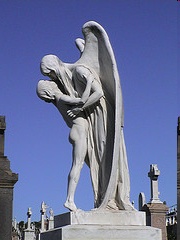
“Yes” said the little four year old girl when asked if she believed in angels. “Why?” asked the reporter. “I don’t know”, she said. The ABC news segment went on to say how 68% of America believes in angels. For background, google [Are Angels Real? Live Science]. Why do people not only believe in angels, […]
Continue reading…The Amazonian ‘Taoists’
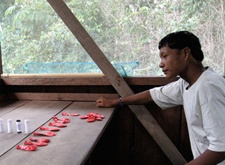
The Piraha people, a tribe in the Amazon, gives insight into how innate a Taoist approach to life may actually be, and that the human mind has just become a little sidetracked of late. Of late, meaning the last 10,000 years or so. For an overview, google [Don’t Sleep, There Are Snakes: Life and Language […]
Continue reading…Is Enlightenment Something or ???

Enlightenment is an interesting illusion. Just as chapter 2’s Something and Nothing produce each other, so do ignorance and enlightenment. The question is, what does enlightenment Correlate to, Something or Nothing? (See Tools of Taoist Thought: Correlations, p.565.) If enlightenment is Something, it correlates to obvious, bright, light, life, full, sudden, special, etc. If enlightenment […]
Continue reading…Who’s a Sage?
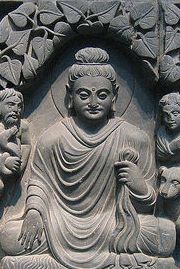
Some people have accused me of being a sage. Granted, I am a lao tzu (i.e., 老子 – father, old man), but a sage? While this may feel flattering at first, further pondering shatters that. Besides, it actually takes a real sage to know a real sage. What we see ‘out there’ is simply a reflection […]
Continue reading…It’s Like Magic!
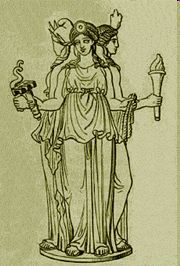
I am always amazed at how magical magic is. The slight of hand a good magician employs is remarkable. How does he do it? Distraction they say, but it is hard to believe that I can be so easily hoodwinked. Nevertheless, I am. The untrained observer’s eye will follow where the magician’s hand leads it, […]
Continue reading…How do we know what is true?
How do we know what we know is true? The answer hinges on desire. We tend to see what we desire to see; therefore, much depends on the extent of our desires. The more we desire, the less we know. Unless all we wish to know, are only our desires. This doesn’t happen naturally though. […]
Continue reading…PS
I struggled to make the essence of my previous post read as simply as I saw it. I feel I failed, so I’m going to take another shot at this. The following excerpt from the article The Decider […Informing the debate over the reality of free will], is my launch pad: “So brains are programmed […]
Continue reading…The Decider
Google: [Can Neuroscience Inform the Free Will Debate] for an overview of science and free will. This excerpt from Science News’, The Decider […Informing the debate over the reality of free will] also touches on key points: “Perhaps,” write neuroscientists Alireza Soltani and Xiao-Jing Wang, “we are entering a new period of consilience between the science […]
Continue reading…Peeking in on Nature’s Hoodwink
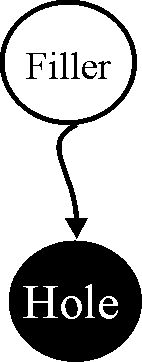
We are born with a bio-illusion — a bio-hoodwink(1) — that goes like this: Through hunting, “I” gathers fillers to satiate (fill) the hole. Primal emotions of need (e.g., desire, wish) and fear (e.g., insecurity, anxiety) drive this illusion forward. This illusion originates in the survival instinct to find food to fill the empty belly. […]
Continue reading…