| 1 | 2 | 3 | 4 | 5 | 6 | 7 | 8 | 9 |
| 10 | 11 | 12 | 13 | 14 | 15 | 16 | 17 | 18 |
| 19 | 20 | 21 | 22 | 23 | 24 | 25 | 26 | 27 |
| 28 | 29 | 30 | 31 | 32 | 33 | 34 | 35 | 36 |
| 37 | 38 | 39 | 40 | 41 | 42 | 43 | 44 | 45 |
| 46 | 47 | 48 | 49 | 50 | 51 | 52 | 53 | 54 |
| 55 | 56 | 57 | 58 | 59 | 60 | 61 | 62 | 63 |
| 64 | 65 | 66 | 67 | 68 | 69 | 70 | 71 | 72 |
| 73 | 74 | 75 | 76 | 77 | 78 | 79 | 80 | 81 |
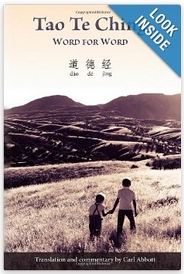
A print-on-demand copy of this site’s Tao Te Ching: Word for Word (Translation only) is available from Amazon.com for around $5. The Tao Te Ching: Word for Word Translation (with Commentary) is available from Amazon.com for around $10.
Either can be especially useful when used in conjunction with your favorite translation. The word for word approach offers a way to cross check your translation with either (1) a translation more literal, or (2) actually word for word to the original Chinese.
Also available on Amazon is the print-on-demand book, Taoist Thought: Returning to Original Self. Here is a brief introduction:
Who are you?
Before you answer this question, consider the influences engulfing your entire life—facts and traditions, politics and religion—all the ins and outs of civilization. Deeper down come the personal needs and fears, desires and worries, friends and enemies, loves and hates… everything that is possible to name and remember. All these elements make up who you think you are.
Now, what would it feel like to return to who you were before taking on all this cultural ‘baggage’? The only apparent pathways are either holding on more tightly to familiar baggage or trading it in for ‘new and improved’ baggage. One way or another, you’re still burdened down. How can you return to your origin and the simplicity and innocence of that original self? The Tao Te Ching, chapter 52, offers a hint… Already knowing its offspring, return to observe the origin. Nearly rising beyond oneself.
But let’s be honest—we are trapped in our story; a situation that chapter 71 addresses forthrightly… Realizing I don’t know is better; Not knowing this knowing is disease. Classifying this as a disease is blunt. It’s also true. Being innately incapable of knowing that we truly don’t know causes most of the turmoil that humanity inflicts upon itself and nature. Believing that our thoughts are true allows thought to run away with itself, firing up emotions that snowball into overreaction. This puts any return to observe the origin or nearly rising beyond oneself beyond our reach.
The Tao Te Ching is singular in its attempt to help us deal with this disease. Since it was written so succinctly and so long ago, it naturally invites commentary current with the times. Accordingly, the book Taoist Thought links up Taoist principles with contemporary observations to help counteract any mindset that traps us. As chapter 16 portrays this approach… Impartial therefore whole, whole therefore natural, Natural therefore the way. The way therefore long enduring, nearly rising beyond oneself. While we may not cure the disease, we can mitigate its most destructive effects by cultivating a more subtle and impartial way of thinking.
These 288 short essays began here on CenterTao.org between 2008 and 2026, now gathered into a single volume.
If you recognize this trap, Taoist Thought: Returning to Original Self will help your mind wriggle its way out.