It may help to consider Taoism and the Tao Te Ching as similar in name only. You could say that Taoist thought is too subtle, even inexplicable, to be pinned down in an ‘ism’. The first line of the Tao Te Ching exemplifies this: The way possible to think, runs counter to the constant way. The ‘possible to think’ characteristic of belief itself forms the foundation of every ‘ism’.
It will also help to realize that the Tao Te Ching isn’t about conveying truth per se. As Chuang Tzu said in his story, Duke and the Wheelwright, “But these ancients, and what it was not possible for them to convey, are dead and gone: so then what you, my Ruler, are reading is but their dregs and sediments!”. The truth we seek only blossoms through personal experience — not through analytical and intellectual nit picking. Thus, the Tao Te Ching does not teach us anything. In reading it, we simply see our own mind’s intuitive edge. This edge lies at the borders of the ‘big picture’ — a ‘big picture’ that is often too subtle for us to express on our own.
A case in point: Chapter 65’s, Of ancients adept in the way, none ever use it to enlighten people, They will use it in order to fool them has puzzled me for years… forty some to be exact. Recently my puzzlement lifted as I noticed a subtle ‘something’. Is this ‘something’ truly something, or will it turn into nothing tomorrow as I discover holes in it? If I reveal this ‘something’ to you… and you believe it… yet it turns into nothing, then I’d have “fooled” you. However, even if my ‘something’ is real, revealing it (if I could) could not teach you. Why?
First, “The way possible to think, runs counter to the constant way” implies that teaching anything is inherently limited — period!
Second, realization evolves within. We can’t hurry the process, and others can’t teach us what we don’t know intuitively already (see We only understand what we already know). While you can teach me to learn procedure (mimic), you can’t teach me to learn the underlying essence. That knowing germinates within, more epiphany like, as it were. So, be puzzled and ponder in wonder. There is no other way to know ourselves. Happily, the Tao Te Ching provides abundant grist for our mind’s mulling mill.
Another case in point: Chapter 29 says, With desire choosing anything, of doing I see no satisfied end. All under heaven is divine capacity; nothing must be done either. The Tao Te Ching refers to All under heaven often. What does it mean? You can interpret this literally to mean an external All… ‘out there’. You can also see this as an internal All… ‘in here’. What is the distinction?
What and how you see life frames your understanding. Looking for and seeing sharp distinctions convey sharp understanding. Looking for and seeing what is called the without of shape form, the without of matter shape, conveys the opposite. The latter smoothes over distinctions to a point where you’ll feel your perceptions of ‘out there’ are merely reflections of your internal ‘in here’ reality. This is called profound sameness, as chapter 56 puts it… or at least an aspect of that. Chapter 40 hints at this ‘out there’ is ‘in here’ viewpoint too, In the opposite direction, of the way moves.
Finally: Knowing the past informs the present. Having a broader sense of the past puts the Tao Te Ching in context. See The Tradeoff for a succinct and comprehensive overview of human pre-history and history.
Translations of the Tao Te Ching
A number of popular ‘translations’ out there are actually interpretations of other original translations. Of original and authoritative translations, D.C. Lau’s is one of the most faithful to the original Chinese, except for the more literal Tao Te Ching, Word for Word .
D.C. Lau’s, published in 1963 by Penguin, is the one we used primarily until the Tao Te Ching, Word for Word was finished. The value of D.C. Lau’s translation may lie in the fact that he does not seem to be a ‘true believer’. After all, there is nothing like a true believer’s interpretative zeal to muck up the possibilities for a broader, possibly less biased view. I don’t know whether he would even call himself a Taoist. Likewise, I too am neither a ‘true believer’ nor like calling myself a Taoist, although I’ll admit to being a Small ‘t’ Taoist.
‘Received’ texts of the Tao Te Ching are copies of the Chinese original copied many times over the centuries from the third or fourth century AD to the present. Until recently, all translations of the Tao Te Ching relied on these ‘received’ texts. In 1973, two original copies of the Tao Te Ching were unearthed from a tomb in China. These silk manuscripts, the so-called Ma-Wang-Tui texts, dated to 168 BC, or about 500 years earlier than any previous manuscripts. Excellent translations which draw from the 1973 discovery are shown below.
We spent 10 years comparing D.C. Lau’s 1963 translation with Victor H. Mair’s translation of the Ma-Wang-Tui texts and then again with D.C. Lau’s 1989 translation of the Ma-Wang-Tui texts. We found no substantive differences between them, though occasionally Mair’s book will put an idea across more smoothly than the Lau’s, in our view. Both, taken together, go as far as one can go in getting ‘it’ across using proper English. Alas, the beauty of proper English unavoidably skews the truth at times. As chapter 81 cautions, True speech isn’t beautiful, Beautiful speech isn’t true. In any case, the ‘it’ lies in the mind’s eye of the beholder in the end…
It’s in the Eye of the Beholder
Many folks make much ado about the merits of one translation over others. Nevertheless, the most significant factor in ‘understanding’ scripture lies in the eye of the beholder – the reader. The cultural lens through which you see the world will determine what a scripture says to you. Much of the modern world, East and West, has adopted an activist and humanist world view which places the individual, ego and all, at the forefront of life meaning.
This cultural bias affects our interpretation of the Tao Te Ching. Simply said, the Taoist view is just about 180° opposite from ‘common’ views and practices; although, truth be told, it has always been an outlier. Chapter 40 puts it well,
The Taoist view runs counter to the instinctive and emotion based viewpoint we form from childhood onward. The mainstream perspective is rooted in biology and directed through evolution to motivate us to see and react in certain ways that promote survival, or at least did so until 100,000 years ago! Now, these ‘bio-logic’ based views are playing themselves out in complex technology based civilization. This results in wasted energy and unnecessary suffering. Note: Taoist views parallel the principle teachings of Jesus and Buddha. These aren’t adhered to any better today than when they were first espoused. Obviously because they also, In the opposite direction, of the way moves.
Praise ‘the Tao’?
‘The way possible to think, runs counter to the constant way’ is a completely unparalleled way to introduce a line of thought! I call this a disclaimer, which is crucial considering the message the Tao Te Ching attempts to convey. Frankly, to be useful, it is a line of thought — a worldview — that one must test personally and prove through life experience.
Note that the Tao Te Ching doesn’t define or praise ‘the Tao’. It simply describes the effects on us of following, or not following, the way of nature. However, some folks show a tendency to ‘praise the Tao’… not unlike the familiar, ‘praise the Lord’. It appears that the word ‘Tao’ easily becomes a substitute word for ‘God’… a kind of god without baggage, so to speak. Naturally, this way of thinking about the way possible to think, runs counter to the constant way is okay, but it does miss the point… by a mile. ‘The Tao’ means nothing. This is symptomatic of the common need to align with something concrete yet greater than ourselves. The word ‘Tao’ — especially with its capitol ‘T’ — nails the way down so we can ‘have a name possible to express ’. On the other hand, if you focus on the fruit (symptoms, effects) instead, you will come to know the tree (tao).
Other Thoughts
Another problem we find with recent translations is that they are often by folks who are obviously ‘humanist’ in temperament. Others seem to bring a large dose of ‘politically correctness’ into play. The problem with both of these situations is that they are not tested in time, but rise out of a modern industrial wealth based society, which in large measure meddles with and seeks to ‘conquer’ nature, not conform to it. Now, more that ever before, we tend to see nature as being separate from us, somehow outside of us… something to be tamed, or to be saved and revered. (Note: Word for Word takes extra care to avoid such contemporary biases. This makes it useful for cross-referencing your favorite translation.)
We want nature on our terms. We struggle to protect ourselves from any acts of nature that threaten our comfort or security — our standard of living, as it were. The unintended consequence of this process is that we feel more isolated than ever before from nature. We’ve so sanitized the ‘wild and raw’ aspects of nature that we cease to realize — feel — that we are nature. The Taoist view helps to reverse this tendency. Chapter 16 puts it well…
In the Taoist view, the cognitive certainty in how we approach living is our Achilles heel, as chapter 71 so frankly puts it, Realizing I don’t’ know is better; not knowing this knowing is disease. Such certainty and the ensuing pre-intention in our approach to life tends to end poorly, as chapter 64 alludes, Of doing we fail, Of holding on we lose. This departure from ‘common sense’ has always made the Taoist point of view a hard pill to swallow for civilized people. Conversely, our uncivilized ancestors experienced enough of nature’s ‘wild and raw’ side to feel sufficiently at one with nature. For more on how our ancestors lived, see the following series of Who are you? posts.
| Who are you? | Who are you? (Part II) | Who are you? (Part III) |
| Who are you? (Part IV) | Who are you? (Part V) | We All Know We Don’t Know |
Note: This is not to say it is unwise to pursue comfort and security! Or that we shouldn’t pursue these any more. Indeed, we will always pursue comfort and security, for this drive arises entirely and naturally out of instinct. Our problem lies in the fact that we are too clever at doing this, and so become unbalanced as a result. “Too much of a good thing”, as they say. It would simply help a lot to honestly realize what is happening. Real solutions require brave self-honesty. That gets the ball rolling… after that, everything else takes care of itself. See The Tradeoff for more depth on this issue.
Chuang Tzu online
From Stephen R. McIntyre’s site, all 33 chapters of James Legge’s version (1891) of The Writings of Chuang Tzu (or download this PDF, The Writings of Chuang Tzu). He has also made these other Chinese Classics available: The Analects of Confucius; The Great Learning of Confucius; The Doctrine of the Mean of Tsze-sze; The Works of Mencius; The Tâo Te Ching.
Not to Pick on “The Idiots Guide to Taoism”, But…
The book misses the point a little by taking Tao to mean method. Of course, that’s one of its various meanings… dào (道) = road, way, path; channel, course; way, path; doctrine, principle; Taoism, Taoist; say, talk, speak; think, suppose.
Their idea is that no one method or path is the ‘constant’ way, or Tao. What they fail to point out is the common thread running through human spirituality, as chapter 14 suggests, The ability to know the ancient beginning; this is called the way’s discipline. Regardless of the particulars unique to any one way, there is the common denominator they all share. This essence that can be tested. It is that which all paths share, but because all paths manifest differently, cannot be expressed… and yet we do. Taoist thought is somewhat different. Well, at least it begins with a serious and sincere disclaimer as noted previously, The way possible to think, runs counter to the constant way, The name possible to express runs counter to the constant name.
Nevertheless, you can know ‘it’, test ‘it’, and use ‘it’. ‘It’ is that common profound sameness that connects all ways.
The constant, referred in chapter 1 and throughout the Tao Te Ching, lies in the similarities — the profound sameness — not in the differences. This book gives a fine overview of Taoism, if not Taoist thought. So, after that, simply go to the source scripture to poke into Taoist ‘secrets’. As chapter 1 says,
CenterTao Recommends
 Tao Te Ching
A favorite translation, used by the Center for decades. However, we mostly use the more literal Word for Word Translation now because we find that it offers more grist for our mind’s mill.
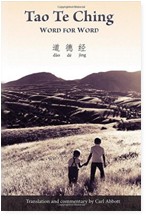
This translation offers ways to cross check your favorite translation with either (1) a translation more literal, or (2) actually word for word to the original Chinese.
 Tao Te Ching
An integration of the newly discovered Ma-wang-tui texts with the traditional Wang Pi text. Personally, I find no significant difference between the two. Still, the differences are interesting to ponder.
 Tao Te Ching
Audio Cassettes. For many people, hearing is better than reading. Just think: the complete unabridged version of D.C. Lau’s Tao Te Ching, recited in 60 minutes. Listen to a sample.
 Tao Te Ching
An excellent translation of the Ma-Wang-Tui text. Comparing it, chapter by chapter, with D.C.Lau’s translation(s) helps resolve misunderstandings which arise with each!
 Tao Te Ching
 The Book of Chuang Tzu
This presents the Taoist world view a little looser and with some humor here and there to boot.
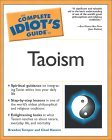 The Complete Idiot’s Guide
This “Idiot” book gives a comprehensive overview of Taoism with lots of quotes from various folks. It should satisfy all your ‘answerable’ questions, yet it will mislead you on the unanswerable ones. To get beyond the inevitable ‘spiritual hype’, go to the source.